Choosing the right knitting needles is just as important as selecting quality yarn. Needles come in numerous materials, styles, and sizes, each with distinct advantages for different projects and knitter preferences. Understanding needle characteristics helps you select the perfect tool for your project, which translates to faster knitting, fewer mistakes, and greater enjoyment of the craft. Whether you're a beginner purchasing your first pair or an experienced knitter expanding your needle collection, this comprehensive guide explains everything you need to know.
Understanding Needle Sizes
Knitting needle sizes determine the fabric density you create, larger needles create larger stitches and looser fabric, while smaller needles create tighter stitches and denser fabric. The international standard uses metric millimeters (1.5mm to 50mm), which is the most consistent sizing system. Some older patterns use US sizes (0 to 50), UK sizes (14 to 000), or other regional systems. Most modern patterns specify both metric and US sizing, so you can easily match needle size to your yarn.
The relationship between yarn weight and needle size is crucial. Each yarn weight has a recommended needle size range, typically printed on the yarn label. Worsted weight yarn, for example, works well with US 8-11 needles (5-8mm). Using a needle size significantly different from the recommendation creates problems: needles that are too small create tight, dense fabric that's difficult to knit and hard on your hands; needles that are too large create loose, floppy fabric that lacks definition. Always start with the recommended needle size, then adjust up or down depending on how tight or loose your tension naturally is.
Straight Needles: The Traditional Choice
Straight needles are single-pointed needles, typically 10-14 inches long, with a stopper at one end to prevent stitches from sliding off. They're the classic image of knitting and remain popular for flat projects like scarves, blankets, and shawls. Straight needles are simple, comfortable for some knitters, and familiar to those who learned from older knitters. However, they have significant limitations. The weight of your project sits on one needle as you work, which becomes uncomfortable and tiring with large projects. Many modern knitters prefer circular or interchangeable needles for ergonomic reasons.
Straight needles work wonderfully for small, quick projects like dishcloths, scarves, and washcloths. If you enjoy knitting and plan to make larger projects regularly, invest in circular needles instead. Your hands and wrists will thank you for the reduced strain and weight distribution that circular needles provide.
Circular Needles: Versatility and Comfort
Circular needles consist of two needle tips connected by a flexible cable, allowing you to knit in the round (creating seamless projects like hats and sweaters) or flat using the same needles. They come in various cable lengths (typically 16 inches to 60+ inches) and are available in standard fixed lengths or interchangeable sets where you can swap needle tips and cables to create any desired length combination. Most modern knitters prefer circular needles for their ergonomic advantages and versatility.
Circular needles distribute project weight along the cable instead of concentrating it on one hand, dramatically reducing hand and wrist fatigue during long knitting sessions. They accommodate projects of any size: your stitches sit on the cable between the needles rather than at risk of sliding off. You can knit flat projects (like scarves and blankets) using two needle tips in a back-and-forth motion, or knit in the round for seamless garments. This versatility means fewer needles to store, lower cost per needle (since one pair serves multiple purposes), and greater flexibility in choosing projects.
Needle Length Selection: For flat projects, choose a cable length close to your finished fabric width. A scarf 6 inches wide works well on a 16-inch circular needle, while a blanket 40 inches wide needs a 40-60 inch circular needle. For working in the round, select a cable length smaller than your project's circumference so stitches don't stretch uncomfortably as you work. Most knitters own several circular needles in different lengths and gauges.
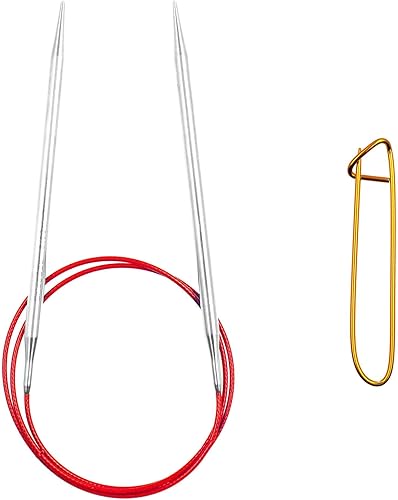
ChiaoGoo Red Lace Circular

Clover Takumi Interchangeable Set
Double-Pointed Needles: For Small Circumferences
Double-pointed needles (often called DPNs) are straight needles with points at both ends, typically sold in sets of four or five needles. They're traditionally used for small circumference projects like hat crowns, mittens, and sock cuffs. You distribute stitches across multiple needles and knit from needle to needle in a circle. While some knitters love DPNs, many beginners find them challenging because stitches easily slide off the blunt ends, and managing multiple needles requires coordination that comes with practice.
Most modern knitters prefer magic loop technique (using a long circular needle) for small projects, or interchangeable needle sets specifically designed for small circumferences. If you're just beginning, skip DPNs for now and explore them once you're comfortable with circular needles. Many accomplished knitters use DPNs regularly, but they're not essential for beginners.
Needle Materials and Their Characteristics
Bamboo and Wood: Natural wood and bamboo needles have slight grip that prevents stitches from sliding off too easily, invaluable for beginners who are developing tension control. The warm, natural feel is pleasant to hold, and the slightly matte surface is less slippery than metal. Bamboo and wood needles are quieter than metal needles (no clicking sound), which some find meditative and others find dull. They're relatively inexpensive and durable, though they can develop splinters with heavy use and don't last as long as metal. For beginners, bamboo needles are an excellent choice that won't frustrate you with stitches constantly sliding off.
Metal (Aluminum and Steel): Metal needles are smooth, allowing stitches to slide freely, which speeds up knitting for experienced knitters who have developed consistent tension. Metal needles are extremely durable, lightweight, and won't splinter. However, the smooth surface means stitches can slide off easily, problematic for beginners who haven't mastered tension control. Metal needles also create an audible clicking sound that some find satisfying and meditative, while others find annoying. Metal is excellent for experienced knitters working with yarn that has good grip (like wool), but may frustrate beginners. Avoid metal needles until you're confident in your tension control.
Plastic: Plastic needles are the least expensive option and work well for children or casual knitters. However, they can feel cheap, crack or break under pressure, and the surface can become sticky with age. Most knitters quickly graduate from plastic needles, so investing in bamboo or metal is worthwhile from the start.
Specialty Materials: Some luxury needle brands offer needles in exotic wood, resin, or bone. These are expensive but are often heirloom-quality needles that feel wonderful to use. Most knitters don't need specialty needles, but if you fall in love with knitting, a pair of premium needles in the size and style you use most frequently can be a worthwhile investment.
Selecting Needles for Different Yarn Types
Your yarn choice influences which needles work best. Slippery yarns like silk, rayon, or very smooth merino work better with wooden or bamboo needles that provide grip. These yarns constantly threaten to slide off smooth metal needles. Grabby yarns like raw, textured, or rustic wools work wonderfully with metal needles because the yarn holds the stitches firmly. Fuzzy or hairy yarns (mohair, angora) can be challenging on any needles because the fibers catch slightly, and smooth metal needles that allow you to see your stitches clearly help prevent mistakes.
If you knit with a variety of yarn types, invest in a range of needle materials. Many knitters maintain a collection including some bamboo needles for slippery yarns and some metal needles for basic wool yarns. As you develop preferences, you'll naturally gravitate toward certain materials and styles.
Interchangeable Needle Systems
Interchangeable needle systems consist of needle tip pairs and cables of various lengths that screw or click together, allowing you to create any combination of needle size and cable length. Popular brands like ChiaoGoo and Addi offer interchangeable systems that are expensive upfront but economical long-term because you buy additional needle sizes and cables rather than complete new needle pairs.
Interchangeable sets are excellent for knitters who regularly tackle projects of varying sizes and gauges. If you knit frequently and see yourself investing in multiple needle sizes and lengths, an interchangeable system pays for itself quickly and provides superior organization and storage. However, if you're just beginning, purchasing individual needle pairs in the sizes you need for upcoming projects is more economical than investing in a full interchangeable set.
Special Needle Types and Specialty Uses
Needles for Increases and Decreases: Standard needles work for everything, but some knitters prefer needle tips with sharper points for delicate decreases and detailed stitch manipulation. Most standard needles provide adequate points for general knitting, but if you're working detailed lace or cables, trying needles with particularly sharp points might improve your experience.
Needles for Tension Control: If you knit extremely tightly (a common beginner issue), try needles one size larger than recommended to loosen your fabric. If you knit loosely, needles one size smaller than recommended will tighten your gauge. Needle size is your primary control for managing tension after you've developed awareness of your natural tension style.
Traveling Needles: Flexible circular needles roll up compactly and travel well, ideal for keeping in your bag for portable knitting. Standard circular needles work fine for traveling, but some brands offer specifically designed travel-friendly needles.
Building Your Needle Collection
As a beginner, purchase only the needle size and style your current project requires. Avoid the temptation to buy a full set of every size. Once you've finished several projects and understand your preferences, you'll naturally recognize which needle materials and styles work best for you. Many knitters find their needle preferences change as they gain experience, beginners often prefer bamboo needles for security, while experienced knitters might prefer metal needles for speed.
A reasonable starting needle collection includes: one pair of bamboo or wooden circular needles in the size specified for your first project; one pair of metal circular needles if you're confident; and perhaps one set of double-pointed needles if you plan to knit socks or mittens. As you complete more projects, add needle sizes as needed. Gradually, you'll develop a collection that covers your most-used gauges and projects. Many knitters eventually organize needles in a special case and maintain a mental catalog of their needle inventory, selecting the perfect tool for each new project.
Final Thoughts on Needle Selection
The perfect needle is the one that feels comfortable in your hands and produces fabric you love with yarn you enjoy. Don't let needle choices overwhelm you: your first pair of needles should be appropriate for your yarn and style, and you'll refine your preferences as you gain experience. Invest in quality needles that won't wear out or break under normal use, and avoid the temptation to collect every possible size and material. Your hands know what they like, and once you've tried various needle types, you'll instinctively reach for your favorites. Happy knitting!