Knitting is one of the most rewarding hobbies you can start. Whether you're looking for a meditative craft, a way to create personalized gifts, or simply a new skill to master, this comprehensive guide will walk you through everything you need to know to begin your knitting journey with confidence.
What You'll Need to Get Started
Before you begin, you'll need just a few essential supplies. The beauty of knitting is that you don't need much to start. A pair of needles and some yarn are all that's required to begin learning the basics. Most beginners find success starting with medium-weight yarn like worsted weight, as it's easier to see your stitches and control than thinner yarns. For your first project, choose needles that match your yarn weight, typically US 8-10 for worsted weight yarn. Look for needles made from bamboo or wooden materials, as they grip yarn slightly better than metal, making them ideal for beginners who are still developing tension control.
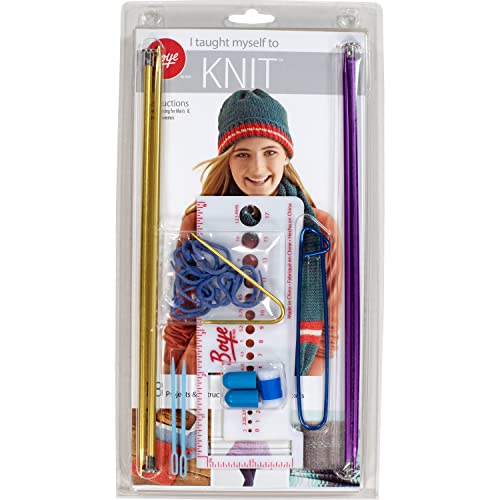
Boye Learn to Knit Kit
Understanding Yarn Weight and Fiber Types
Yarn comes in many different weights and fiber compositions, each suited for different projects and skill levels. The standard yarn weight system ranges from lace weight (very thin) to jumbo weight (very thick). As a beginner, start with medium-weight yarns, worsted weight is the most forgiving and shows your progress clearly. Understanding fiber types is equally important. Wool is traditional and has excellent memory, meaning your stitches stay in place. Acrylic is budget-friendly and easy to care for, making it perfect for learning. Cotton is ideal for summer projects but requires careful tension management.
Natural fibers like merino wool and alpaca are soft and beautiful but can be more expensive. For your first project, we recommend starting with acrylic or a wool blend, they're affordable, durable, and forgiving of beginner mistakes. Avoid delicate fibers like silk or expensive hand-dyed yarns until you're confident in your technique and tension control.
The Cast-On: Your First Stitches
The cast-on is the foundation of your entire project. It creates the initial loop of stitches on your needle. The most beginner-friendly cast-on is the long-tail cast-on, which is versatile enough for almost any project. To begin, hold one needle in your right hand and create a loop at the end of your yarn. The loop should be large enough to fit over your thumb and forefinger. Insert the needle through the loop and pull the yarn tight. This creates your first stitch.
Continue this process, creating new loops and inserting your needle, until you have the desired number of stitches on your needle. This initial setup is crucial, cast on too tightly and your stitches will be difficult to work with; too loosely and your edges will be floppy and uneven. The key is consistency. Take your time with the cast-on and aim for even tension throughout.
The Knit Stitch: The Heart of Knitting
The knit stitch is the most fundamental stitch in knitting and forms the basis for almost every pattern you'll encounter. Once you master this single motion, you're well on your way to creating beautiful projects. To work a knit stitch, insert your right needle through the first stitch on your left needle from left to right. Wrap the yarn around the right needle and pull it through the stitch, sliding the original stitch off the left needle. Congratulations: you've made one knit stitch. Repeat this motion across the entire row, and you've completed your first row of stockinette stitch, the most common fabric in knitting.
The key to success with knit stitches is maintaining consistent tension. Your stitches should be snug enough to hold their shape but loose enough to slide along your needle without struggle. Most beginners hold the yarn too tightly, creating stitches that are difficult to work with. If you find yourself struggling, try relaxing your grip slightly. Your hands will develop muscle memory naturally as you practice.
The Purl Stitch: Knitting's Complement
The purl stitch is simply a knit stitch worked in reverse. While the knit stitch creates a smooth V-shaped appearance, the purl stitch creates a bumpy texture. Together, knit and purl stitches create endless pattern possibilities. To work a purl stitch, insert your needle through the stitch from right to left (the opposite direction from a knit stitch), wrap the yarn around, and pull through. The purl stitch feels awkward at first, but once your hands learn the motion, it becomes as natural as the knit stitch.
Combining knit and purl stitches creates ribbed patterns, cables, and textured designs. Ribbed patterns are especially useful for cuffs and edges as they provide stretch and a professional finish. A simple 1x1 rib, created by alternating knit and purl stitches, is the perfect next step after mastering basic stockinette.
Binding Off: Finishing Your Work
After you've knitted your rows and reached the top of your project, you need to bind off, secure your stitches so they don't unravel. The basic bind-off is simple: knit two stitches, pass the first stitch over the second and off the needle, knit one more stitch, and repeat until one stitch remains. Cut your yarn, pull it through the final loop, and weave in the end. Your project is now complete and won't unravel.
Binding off is an art in itself, and your tension here is crucial, bind off too tightly and your edge will pucker; too loosely and it will be stretchy and uneven. Practice maintaining the same tension as the body of your project. Many knitters find this easier after they've completed a full project and gotten comfortable with yarn tension management.
Your First Projects: What to Knit
Your first project should be something simple that teaches fundamental skills without overwhelming you. A dishcloth is an ideal starter project: it requires only knit stitches, is forgiving of mistakes, and actually serves a purpose. A simple garter stitch scarf (knitting every row) is another excellent first project that teaches rhythm and consistency. These projects typically take only a few hours and build your confidence tremendously. Once you've completed these basics, you'll be ready to tackle slightly more complex patterns like simple hats, scarves with texture, or easy baby garments.
The most important rule for beginners is to choose projects you actually want to wear or use. Motivation is crucial, and completing a project you love will inspire you to tackle your next one. Avoid complex patterns or ambitious projects until you've built solid foundational skills, finishing a simple project successfully builds more confidence than struggling with an advanced pattern.
Common Beginner Mistakes and How to Avoid Them
One of the most common beginner mistakes is tension anxiety. Many new knitters worry obsessively about whether their tension is perfect. Don't worry: your tension will improve naturally with practice. Every knitter has slightly uneven tension at first, and these imperfections are virtually invisible in the finished product. Another common issue is accidentally increasing or decreasing stitches (adding extra stitches or losing stitches). This usually happens because you're accidentally knitting into the yarn strand between stitches. Count your stitches at the end of each row for the first few projects.
Twisted stitches are another frequent issue, where your stitches appear crossed. This typically happens when you're inserting your needle incorrectly. Take a moment to ensure you're inserting from left to right for knit stitches and right to left for purl stitches. Finally, don't be afraid to unravel and start over. Experienced knitters often tear out entire rows if they make mistakes. It's better to spend five minutes correcting an error than to continue with imperfect work.
Starting your knitting journey is an exciting decision that will open up a world of creativity and relaxation. With practice and patience, you'll soon be creating beautiful, wearable projects that you'll treasure for years to come. Happy knitting!